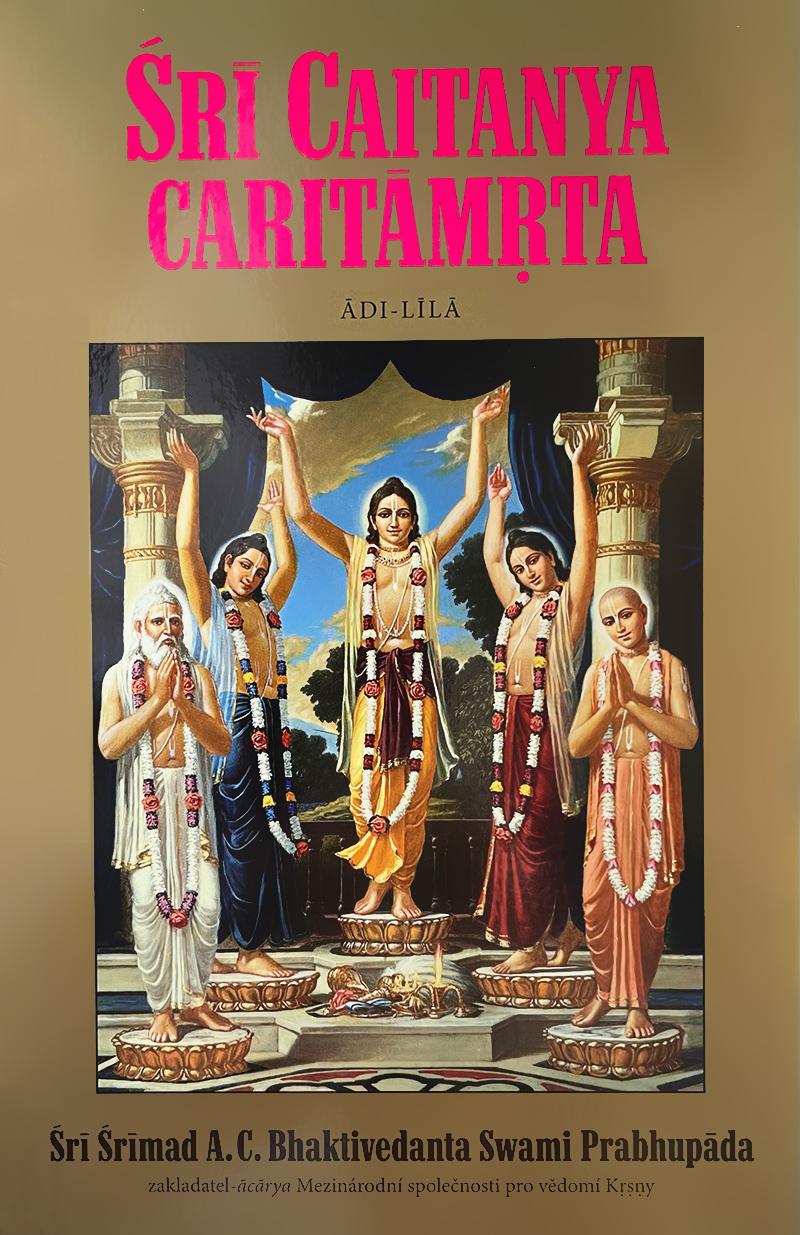
Śrī Caitanya-caritāmṛta - Ādi-līlā - 16. The Pastimes of the Lord in His Childhood and YouthNot only did Śrī Caitanya Mahāprabhu pick out this one among the one hundred verses and remember it although the brāhmaṇa had recited them like the blowing wind, but He also analyzed its qualities and…
Śrī Caitanya-caritāmṛta - Ādi-līlā - 16. The Pastimes of the Lord in His Childhood and YouthIn the last line of the verse quoted by Śrī Caitanya Mahāprabhu, the letter bha is repeated many times, as in the words bhavānī, bhartur, vibhavati and adbhuta. Such repetition is called anuprāsa, or …
Śrī Caitanya-caritāmṛta - Ādi-līlā - 16. The Pastimes of the Lord in His Childhood and YouthKeśava Kāśmīrī first wanted to bluff Śrī Caitanya Mahāprabhu by saying that since He was not an advanced student in literary style, He could not review a verse full of metaphors and literary ornaments…
Śrī Caitanya-caritāmṛta - Ādi-līlā - 16. The Pastimes of the Lord in His Childhood and YouthThe statement kariyāchi śravaṇa (“I have heard it”) is very important in the sense that hearing is more important than directly studying or perceiving. If one is expert in hearing and hears from the r…
Śrī Caitanya-caritāmṛta - Ādi-līlā - 16. The Pastimes of the Lord in His Childhood and YouthIn the verse beginning with mahattvaṁ gaṅgāyāḥ there are five literary ornaments and five examples of faulty composition. There are two examples of the fault called avimṛṣṭa-vidheyāṁśa and one example…
Śrī Caitanya-caritāmṛta - Ādi-līlā - 16. The Pastimes of the Lord in His Childhood and YouthVimṛṣṭa means “clean,” and vidheyāṁśa means “predicate.” It is a general rule of composition to establish a subject first and then give its predicate. For example, according to Sanskrit grammar if one…
Śrī Caitanya-caritāmṛta - Ādi-līlā - 16. The Pastimes of the Lord in His Childhood and YouthThe second instance of avimṛṣṭa-vidheyāṁśa-doṣa occurs in the words dvitīya-śrī-lakṣmīr iva. In this composition the word dvitīya (“second”) is vidheya, or unknown. Placing the unknown first to make t…
Śrī Caitanya-caritāmṛta - Ādi-līlā - 16. The Pastimes of the Lord in His Childhood and YouthThe third fault is that of viruddha-mati, or contradictory conception, in the words bhavānī-bhartuḥ. The word bhavānī refers to the wife of Bhava, Lord Śiva. But since Bhavānī is already known as the …
Śrī Caitanya-caritāmṛta - Ādi-līlā - 16. The Pastimes of the Lord in His Childhood and YouthThe fourth fault is punar-ukti, or redundancy, which occurs when the verb vibhavati (“flourishes”), which should have ended the composition, is further qualified by the unnecessary adjective adbhuta-g…
Śrī Caitanya-caritāmṛta - Ādi-līlā - 16. The Pastimes of the Lord in His Childhood and YouthThis is a verse from the Ekādaśī-tattva.