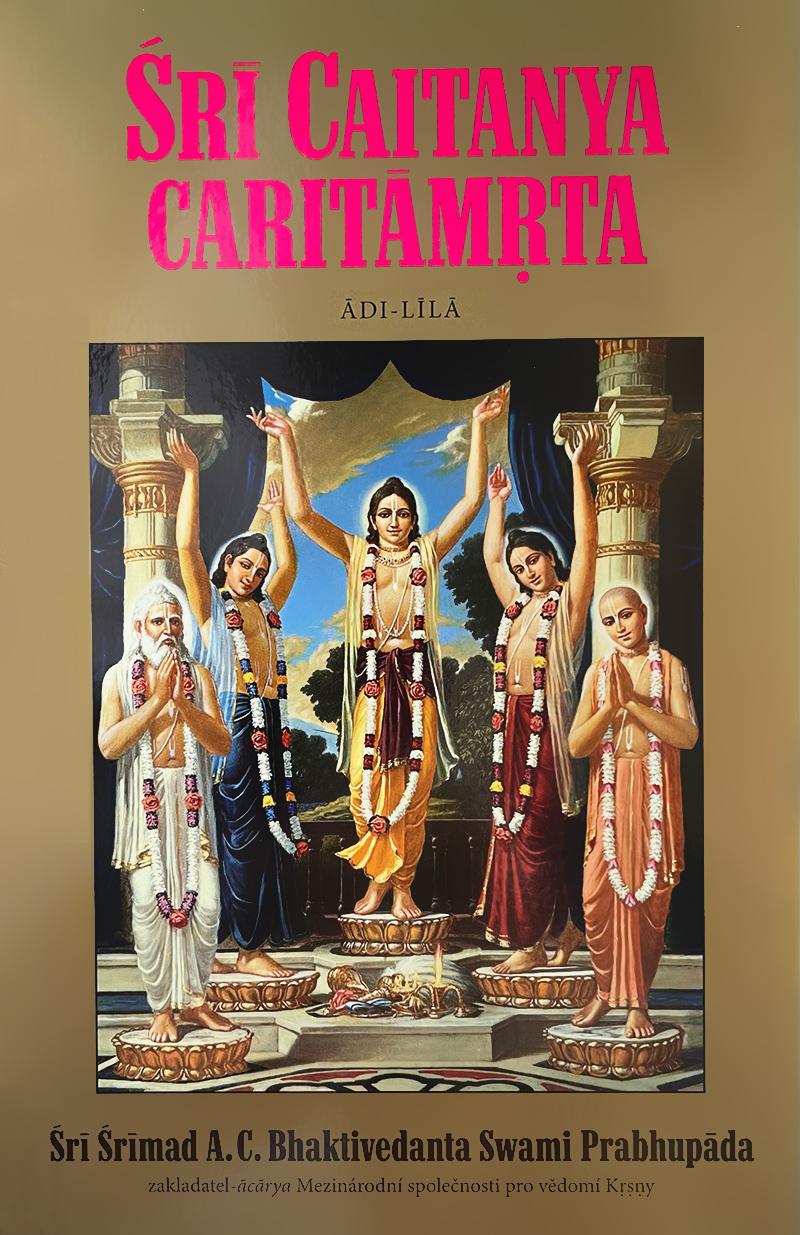
Śrī Caitanya-caritāmṛta - Ādi-līlā - 17. The Pastimes of Lord Caitanya Mahāprabhu in His YouthSome devotees call this exhibition of ecstasy by the Lord sāta-prahariyā bhāva, or “the ecstasy of twenty-one hours,” and others call it mahābhāva-prakāśa or mahā-prakāśa. There is a description of th…
Śrī Caitanya-caritāmṛta - Ādi-līlā - 17. The Pastimes of Lord Caitanya Mahāprabhu in His YouthOne day Caitanya Mahāprabhu began to cry out, “Śūkara! Śūkara!” Thus crying out for the boar incarnation of the Lord, He assumed His form as the boar incarnation and got up on the shoulders of Murāri …
Śrī Caitanya-caritāmṛta - Ādi-līlā - 17. The Pastimes of Lord Caitanya Mahāprabhu in His YouthTo emphasize something to an ordinary person, one may repeat it three times, just as one might say, “You must do this! You must do this! You must do this!” Thus the Bṛhan-nāradīya Purāṇa repeatedly em…
Śrī Caitanya-caritāmṛta - Ādi-līlā - 17. The Pastimes of Lord Caitanya Mahāprabhu in His YouthOur Kṛṣṇa consciousness movement stresses the chanting of the Hare Kṛṣṇa mantra only, whereas those who do not know the secret of success for this Age of Kali unnecessarily indulge in the cultivation …
Śrī Caitanya-caritāmṛta - Ādi-līlā - 17. The Pastimes of Lord Caitanya Mahāprabhu in His YouthThis practice of forbearance (taror iva sahiṣṇunā) is very difficult, but when one actually engages in chanting the Hare Kṛṣṇa mantra, the quality of forbearance automatically develops. A person advan…
Śrī Caitanya-caritāmṛta - Ādi-līlā - 17. The Pastimes of Lord Caitanya Mahāprabhu in His YouthThe grass is specifically mentioned in this verse because everyone tramples upon it yet the grass never protests. This example indicates that a spiritual master or leader should not be proud of his po…
Śrī Caitanya-caritāmṛta - Ādi-līlā - 17. The Pastimes of Lord Caitanya Mahāprabhu in His YouthWhen chanting the Hare Kṛṣṇa mahā-mantra, in the beginning one may commit many offenses, which are called nāmābhāsa and nāma-aparādha. In this stage there is no possibility of achieving perfect love o…
Śrī Caitanya-caritāmṛta - Ādi-līlā - 17. The Pastimes of Lord Caitanya Mahāprabhu in His YouthChanting of the Hare Kṛṣṇa mahā-mantra is open to everyone, but sometimes nonbelievers come to disturb the ceremony of chanting. It is indicated herein that under such circumstances the temple doors s…
Śrī Caitanya-caritāmṛta - Ādi-līlā - 17. The Pastimes of Lord Caitanya Mahāprabhu in His YouthThis brāhmaṇa, Gopāla Cāpāla, wanted to defame Śrīvāsa Ṭhākura by proving that he was actually a śākta, or a worshiper of Bhavānī, the goddess Durgā, but was externally posing as a Vaiṣṇava. In Bengal…
Śrī Caitanya-caritāmṛta - Ādi-līlā - 17. The Pastimes of Lord Caitanya Mahāprabhu in His YouthAccording to the Vedic system there are four castes — the brāhmaṇas, kṣatriyas, vaiśyas and śūdras — and below them are the pañcamas (literally, “members of the fifth group”), who are lower than the ś…