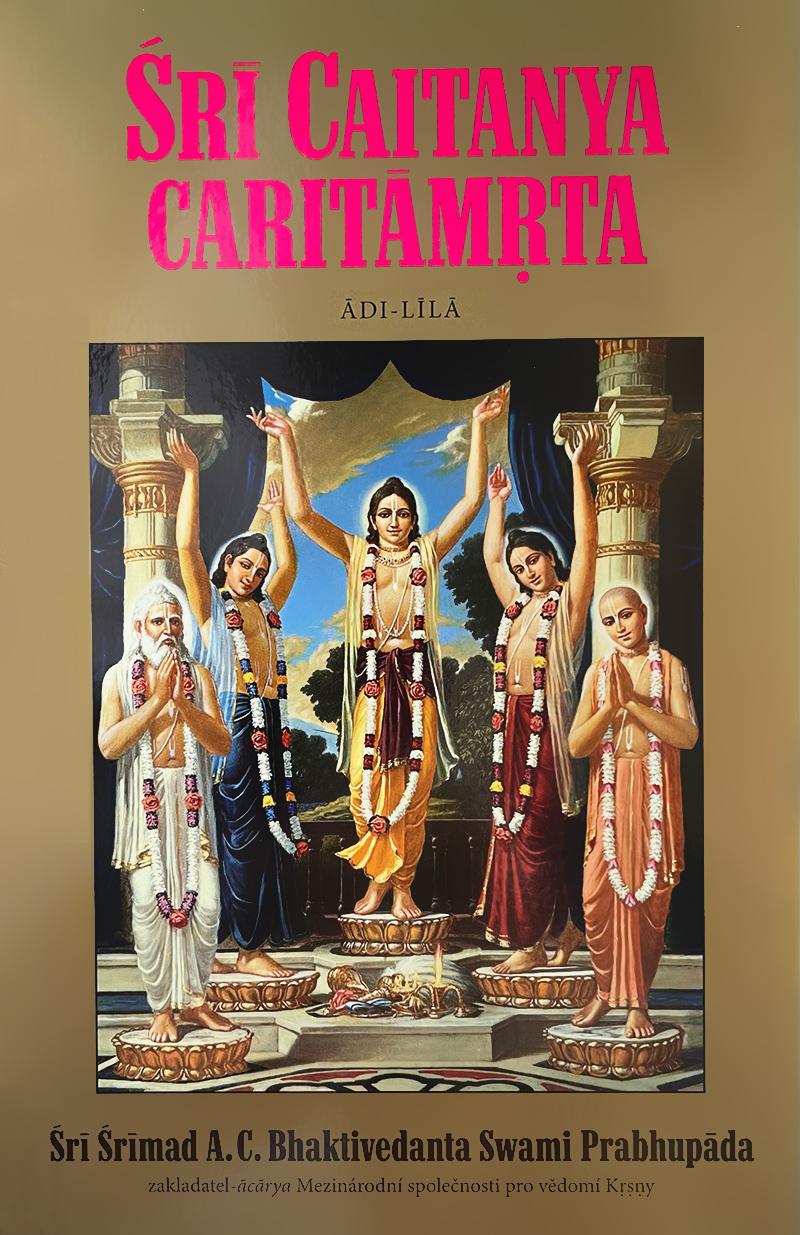
Śrī Caitanya-caritāmṛta - Ādi-līlā - 2. Śri Caitanya Mahāprabhu, the Supreme Personality of GodheadImitation devotees, who wish to advertise themselves as elevated Vaiṣṇavas and who therefore imitate the previous ācāryas but do not follow them in principle, are condemned in the words of Śrīmad-Bhāg…
Śrī Caitanya-caritāmṛta - Ādi-līlā - 2. Śri Caitanya Mahāprabhu, the Supreme Personality of GodheadOne can know the glories of Śrī Caitanya Mahāprabhu only by reaching, in knowledge, a conclusive decision about Śrī Kṛṣṇa, strengthened by bona fide study of the conclusions of the ācāryas.
Śrī Caitanya-caritāmṛta - Ādi-līlā - 3. The External Reasons for the Appearance of Śrī Caitanya MahāprabhuThis is a quotation from the Vidagdha-mādhava (1.2), a drama compiled and edited by Śrīla Rūpa Gosvāmī.
Śrī Caitanya-caritāmṛta - Ādi-līlā - 3. The External Reasons for the Appearance of Śrī Caitanya MahāprabhuIn the previous chapter it has been established that Kṛṣṇa, the son of Vrajendra (the King of Vraja), is the Supreme Personality of Godhead, with six opulences. He eternally enjoys transcendentally va…
Śrī Caitanya-caritāmṛta - Ādi-līlā - 3. The External Reasons for the Appearance of Śrī Caitanya MahāprabhuA manv-antara is the period controlled by one Manu. The reign of fourteen Manus equals the length of one day (twelve hours) in the life of Brahmā, and the night of Brahmā is of the same duration. Thes…
Śrī Caitanya-caritāmṛta - Ādi-līlā - 3. The External Reasons for the Appearance of Śrī Caitanya MahāprabhuNow is the term of Vaivasvata Manu, during which Lord Caitanya appears. First Lord Kṛṣṇa appears at the close of the Dvāpara-yuga of the twenty-eighth divya-yuga, and then Lord Caitanya appears in the…
Śrī Caitanya-caritāmṛta - Ādi-līlā - 3. The External Reasons for the Appearance of Śrī Caitanya MahāprabhuDāsya, sakhya, vātsalya and śṛṅgāra are the transcendental modes of loving service to the Lord. Śānta-rasa, or the neutral stage, is not mentioned in this verse because although in śānta-rasa one cons…
Śrī Caitanya-caritāmṛta - Ādi-līlā - 3. The External Reasons for the Appearance of Śrī Caitanya MahāprabhuAfter His appearance, Lord Kṛṣṇa thought that He had not distributed the transcendental personal dealings with His devotees in dāsya, sakhya, vātsalya and mādhurya. One may understand the science of t…
Śrī Caitanya-caritāmṛta - Ādi-līlā - 3. The External Reasons for the Appearance of Śrī Caitanya MahāprabhuThose engaged in devotional service according to the ritualistic principles mentioned in the scriptures attain these different kinds of liberation. But although such devotees can attain sārṣṭi, sārūpy…
Śrī Caitanya-caritāmṛta - Ādi-līlā - 3. The External Reasons for the Appearance of Śrī Caitanya MahāprabhuWhen one associates with a pure devotee, he becomes so elevated that he does not aspire even for sārṣṭi, sārūpya, sāmīpya or sālokya, because he feels that such liberation is a kind of sense gratifica…