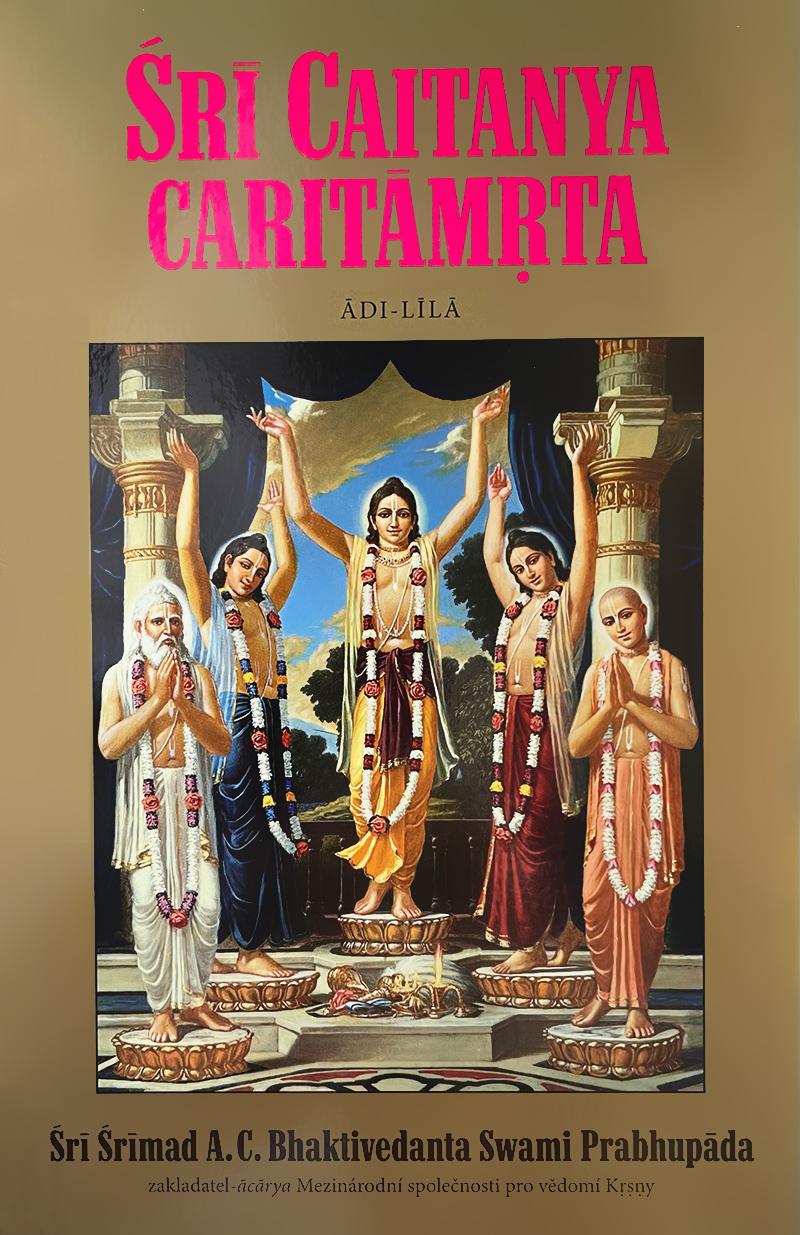
Śrī Caitanya-caritāmṛta - Ādi-līlā - 5. The Glories Of Lord Nityānanda BalarāmaAccording to Śukadeva Gosvāmī, the above description of the material and spiritual skies is neither imaginary nor utopian. The actual facts are recorded in the Vedic hymns, and Lord Vāsudeva disclosed…
Śrī Caitanya-caritāmṛta - Ādi-līlā - 5. The Glories Of Lord Nityānanda BalarāmaIn the Rāmānuja and Madhva sects of Vaiṣṇavism there are extensive descriptions of the śrī, bhū and nīlā energies. In Bengal the nīlā energy is sometimes called the līlā energy. These three energies a…
Śrī Caitanya-caritāmṛta - Ādi-līlā - 5. The Glories Of Lord Nityānanda BalarāmaThere is the following reference to the śrī, bhū and nīlā energies in the Sītopaniṣad: mahā-lakṣmīr deveśasya bhinnābhinna-rūpā cetanācetanātmikā. sā devī tri-vidhā bhavati, śakty-ātmanā icchā-śaktiḥ …
Śrī Caitanya-caritāmṛta - Ādi-līlā - 5. The Glories Of Lord Nityānanda BalarāmaIn his Bhagavat-sandarbha (text 23), Śrīla Jīva Gosvāmī Prabhu states, “The Padma Purāṇa refers to the eternally auspicious abode of Godhead, which is full in all opulences, including the energies śrī…
Śrī Caitanya-caritāmṛta - Ādi-līlā - 5. The Glories Of Lord Nityānanda BalarāmaThere are two kinds of liberated souls — those who are liberated by the favor of the Lord and those who are liberated by their own effort. One who gets liberation by his own effort is called an impers…
Śrī Caitanya-caritāmṛta - Ādi-līlā - 5. The Glories Of Lord Nityānanda BalarāmaOutside of Vaikuṇṭha, the abode of Kṛṣṇa, which is called paravyoma, is the glaring effulgence of Kṛṣṇa’s bodily rays. This is called the brahmajyoti. The transcendental region of that effulgence is c…
Śrī Caitanya-caritāmṛta - Ādi-līlā - 5. The Glories Of Lord Nityānanda BalarāmaThis verse is from the Bhakti-rasāmṛta-sindhu (1.2.278) of Śrīla Rūpa Gosvāmī, who further discusses this same topic in his Laghu-bhāgavatāmṛta (Pūrva 5.41). There he refers to the Viṣṇu Purāṇa (4.15.…
Śrī Caitanya-caritāmṛta - Ādi-līlā - 5. The Glories Of Lord Nityānanda BalarāmaIn his Bṛhad-bhāgavatāmṛta, Śrīla Sanātana Gosvāmī has explained that the attainment of salvation by merging into the Brahman effulgence of the Lord cannot be accepted as the highest success in life, …
Śrī Caitanya-caritāmṛta - Ādi-līlā - 5. The Glories Of Lord Nityānanda BalarāmaDemons are always accustomed to being malicious toward devotees and to killing brāhmaṇas and cows. For demons, merging into the Brahman effulgence may be very glorious, but for devotees it is hellish.…
Śrī Caitanya-caritāmṛta - Ādi-līlā - 5. The Glories Of Lord Nityānanda BalarāmaTamas means darkness. The material world is dark, and beyond the material world is light. In other words, after passing through the entire material atmosphere, one can come to the luminous spiritual s…