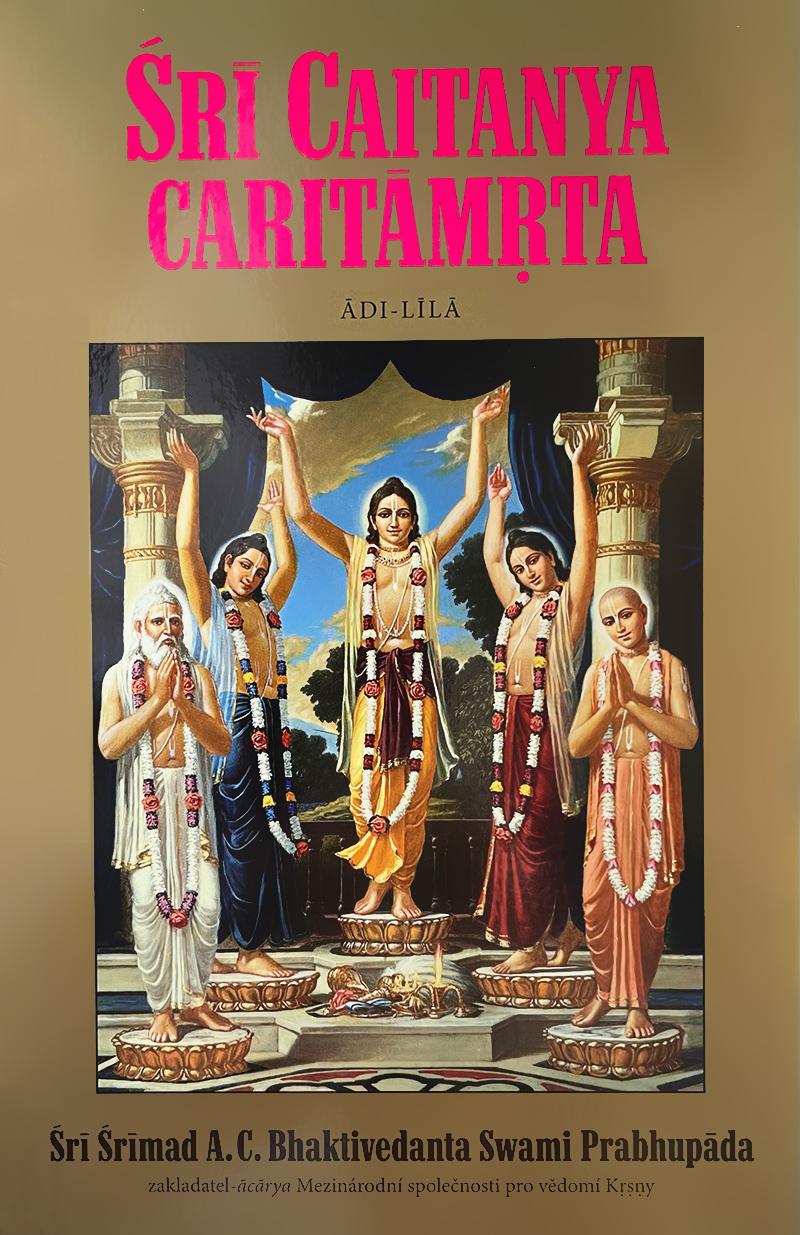
Śrī Caitanya-caritāmṛta - Ādi-līlā - 6. The Glories of Śrī Advaita ĀcāryaThis verse in connection with the rāsa dance of Kṛṣṇa with the gopīs is quoted from Śrīmad-Bhāgavatam (10.31.6). When Kṛṣṇa disappeared from His companions in the course of dancing, the gopīs sang lik…
Śrī Caitanya-caritāmṛta - Ādi-līlā - 6. The Glories of Śrī Advaita ĀcāryaAlthough Lord Baladeva appeared before the birth of Lord Kṛṣṇa and is therefore Kṛṣṇa’s worshipable elder brother, He used to act as Kṛṣṇa’s eternal servitor. In the spiritual sky all the Vaikuṇṭha pl…
Śrī Caitanya-caritāmṛta - Ādi-līlā - 6. The Glories of Śrī Advaita ĀcāryaThere are eleven expansions of Rudra, or Lord Śiva. They are as follows: Ajaikapāt, Ahibradhna, Virūpākṣa, Raivata, Hara, Bahurūpa, Devaśreṣṭha Tryambaka, Sāvitra, Jayanta, Pināki and Aparājita. Besid…
Śrī Caitanya-caritāmṛta - Ādi-līlā - 6. The Glories of Śrī Advaita ĀcāryaA fraction of a particular thing is called a part, and that from which the fraction is distinguished is called the whole. Therefore the fraction, or part, is included within the whole. The Lord is the…
Śrī Caitanya-caritāmṛta - Ādi-līlā - 6. The Glories of Śrī Advaita ĀcāryaWhen a person is liberated in the sārūpya form of liberation, having a spiritual form exactly like Viṣṇu, it is not possible for him to relish the relationship of Kṛṣṇa’s personal associates in their …
Śrī Caitanya-caritāmṛta - Ādi-līlā - 7. Lord Caitanya in Five FeaturesA person in the conditioned stage of material existence is in an atmosphere of helplessness, but the conditioned soul, under the illusion of māyā, or the external energy, thinks that he is completely …
Śrī Caitanya-caritāmṛta - Ādi-līlā - 7. Lord Caitanya in Five FeaturesEveryone depends upon dharma (religiosity), artha (economic development), kāma (sense gratification) and ultimately mokṣa (salvation), but Śrī Caitanya Mahāprabhu, due to His magnanimous character, ca…
Śrī Caitanya-caritāmṛta - Ādi-līlā - 7. Lord Caitanya in Five FeaturesPrabhu means master. Śrī Caitanya Mahāprabhu is the supreme master of all masters; therefore He is called Mahāprabhu. Any person who takes shelter of Śrī Kṛṣṇa Caitanya Mahāprabhu is most glorified be…
Śrī Caitanya-caritāmṛta - Ādi-līlā - 7. Lord Caitanya in Five FeaturesIn the first chapter of the Caitanya-caritāmṛta, Ādi-līlā, the author, Śrīla Kṛṣṇadāsa Kavirāja Gosvāmī, has described the initiator spiritual master and the instructor spiritual master in the verse b…
Śrī Caitanya-caritāmṛta - Ādi-līlā - 7. Lord Caitanya in Five Features“In the Age of Kali, people who are endowed with sufficient intelligence will worship the Lord, who is accompanied by His associates, by performance of the saṅkīrtana-yajña.” Śrī Caitanya Mahāprabhu i…