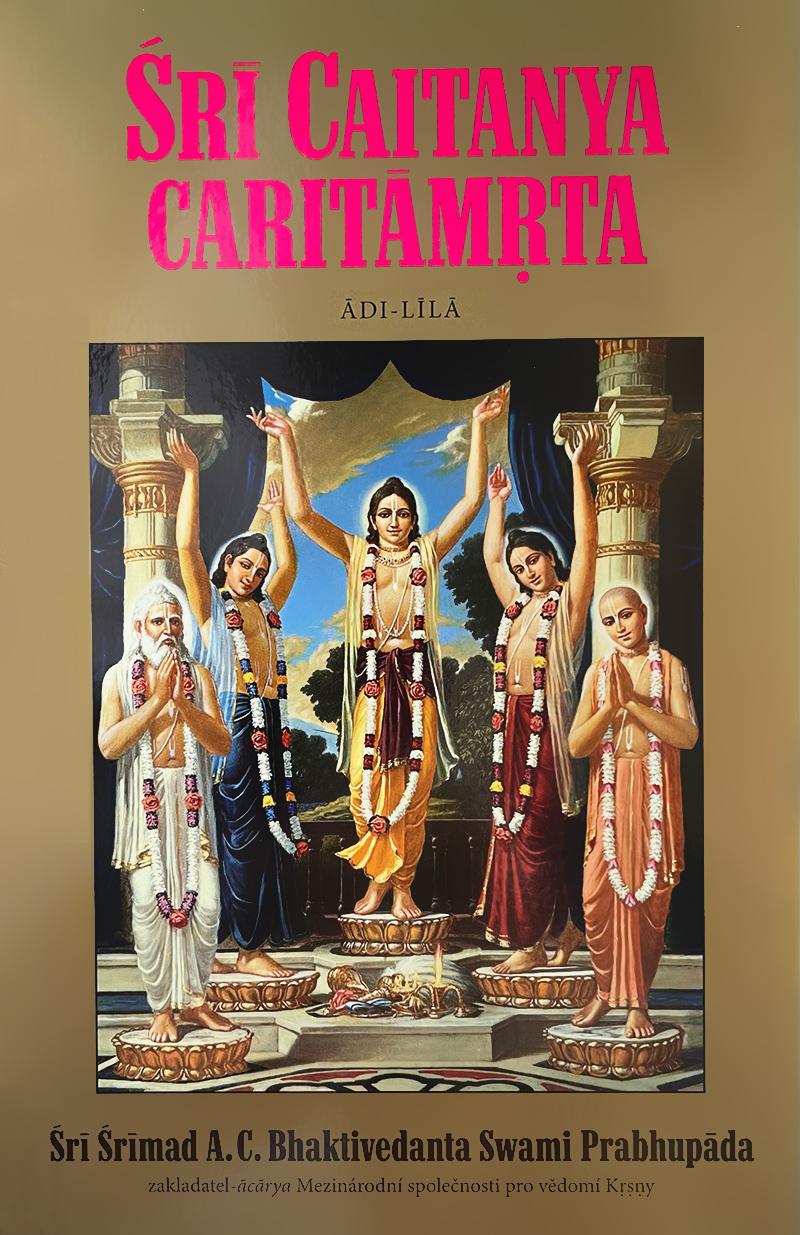
Śrī Caitanya-caritāmṛta - Ādi-līlā - 7. Lord Caitanya in Five FeaturesRegarding the Upaniṣads, the following eleven Upaniṣads are considered to be the topmost: Īśa, Kena, Kaṭha, Praśna, Muṇḍaka, Māṇḍūkya, Taittirīya, Aitareya, Chāndogya, Bṛhad-āraṇyaka and Śvetāśvatara.…
Śrī Caitanya-caritāmṛta - Ādi-līlā - 7. Lord Caitanya in Five FeaturesThe Vedic literature is to be considered a source of real knowledge, but if one does not take it as it is, one will be misled. For example, the Bhagavad-gītā is an important Vedic literature that has …
Śrī Caitanya-caritāmṛta - Ādi-līlā - 7. Lord Caitanya in Five FeaturesOne should not, therefore, attribute very much importance to the Śārīraka-bhāṣya. In order to understand Vedānta philosophy, one must study Śrīmad-Bhāgavatam, which begins with the words oṁ namo bhaga…
Śrī Caitanya-caritāmṛta - Ādi-līlā - 7. Lord Caitanya in Five FeaturesOne may argue that since Śaṅkarācārya is an incarnation of Lord Śiva, how is it that he cheated people in this way? The answer is that he did so on the order of his master, the Supreme Personality of …
Śrī Caitanya-caritāmṛta - Ādi-līlā - 7. Lord Caitanya in Five Features“The Māyāvāda philosophy,” Lord Śiva informed his wife Pārvatī, “is impious [asac chāstra]. It is covered Buddhism. My dear Pārvatī, in Kali-yuga I assume the form of a brāhmaṇa and teach this imagine…
Śrī Caitanya-caritāmṛta - Ādi-līlā - 7. Lord Caitanya in Five Features“In Kali-yuga, mislead the people in general by propounding imaginary meanings for the Vedas to bewilder them.” These are the descriptions of the Purāṇas.
Śrī Caitanya-caritāmṛta - Ādi-līlā - 7. Lord Caitanya in Five FeaturesŚrīla Bhaktisiddhānta Sarasvatī Ṭhākura comments that mukhya-vṛtti (“the direct meaning”) is abhidhā-vṛtti, or the meaning that one can understand immediately from the statements of dictionaries, wher…
Śrī Caitanya-caritāmṛta - Ādi-līlā - 7. Lord Caitanya in Five FeaturesThe purpose of the discussions in the Upaniṣads and Vedānta-sūtra is to philosophically establish the personal feature of the Absolute Truth. The impersonalists, however, in order to establish their p…
Śrī Caitanya-caritāmṛta - Ādi-līlā - 7. Lord Caitanya in Five Features“My dear wife, hear my explanations of how I have spread ignorance through Māyāvāda philosophy. Simply by hearing it, even an advanced scholar will fall down. In this philosophy, which is certainly ve…
Śrī Caitanya-caritāmṛta - Ādi-līlā - 7. Lord Caitanya in Five Features“Learned transcendentalists who know the Absolute Truth call this nondual substance Brahman, Paramātmā or Bhagavān.” The Absolute Truth is ultimately understood as Bhagavān, partially understood as Pa…