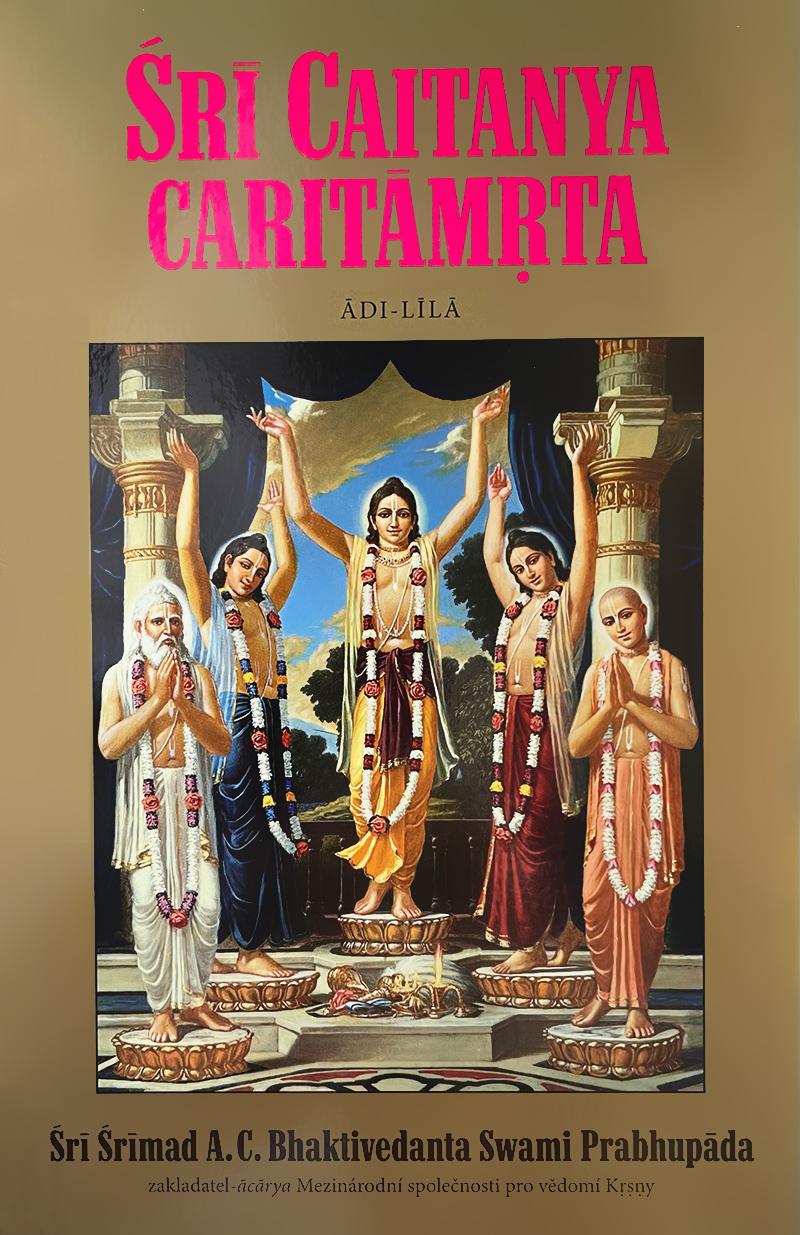
Śrī Caitanya-caritāmṛta - Ādi-līlā - 7. Lord Caitanya in Five FeaturesSimilarly, the transcendental sound oṁ is further explained in the Bhagavad-gītā, chapter Seventeen, verse twenty-three:
Śrī Caitanya-caritāmṛta - Ādi-līlā - 7. Lord Caitanya in Five Features“From the beginning of creation, the three syllables oṁ tat sat have been used to indicate the Supreme Absolute Truth [Brahman]. They were uttered by brāhmaṇas while chanting Vedic hymns and during sa…
Śrī Caitanya-caritāmṛta - Ādi-līlā - 7. Lord Caitanya in Five FeaturesThroughout all the Vedic literatures the glories of oṁkāra are specifically mentioned. Śrīla Jīva Gosvāmī, in his thesis Bhagavat-sandarbha, says that in the Vedic literature oṁkāra is considered to b…
Śrī Caitanya-caritāmṛta - Ādi-līlā - 7. Lord Caitanya in Five FeaturesAll potencies are invested in the holy vibration of the holy name of the Lord. There is no doubt that the holy name of the Lord, or oṁkāra, is the Supreme Personality of Godhead Himself. In other word…
Śrī Caitanya-caritāmṛta - Ādi-līlā - 7. Lord Caitanya in Five FeaturesOn the basis of all the Upaniṣads, Śrīla Jīva Gosvāmī says that oṁkāra is the Supreme Absolute Truth and is accepted as such by all the ācāryas and authorities. Oṁkāra is beginningless, changeless, su…
Śrī Caitanya-caritāmṛta - Ādi-līlā - 7. Lord Caitanya in Five FeaturesOne should not, however, foolishly conclude that because the Supreme Personality of Godhead is omnipotent, we have manufactured a combination of letters — a, u and m — to represent Him. Factually the …
Śrī Caitanya-caritāmṛta - Ādi-līlā - 7. Lord Caitanya in Five FeaturesOṁkāra is a combination of the letters a, u and m. A-kāreṇocyate kṛṣṇaḥ: the letter a (a-kāra) refers to Kṛṣṇa, who is sarva-lokaika-nāyakaḥ, the master of all living entities and planets, material an…
Śrī Caitanya-caritāmṛta - Ādi-līlā - 7. Lord Caitanya in Five FeaturesThe Māyāvādī philosophers consider many Vedic mantras to be the mahā-vākya, or principal Vedic mantra, such as tat tvam asi (Chāndogya Upaniṣad 6.8.7), idaṁ sarvaṁ yad ayam ātmā and brahmedaṁ sarvam (…
Śrī Caitanya-caritāmṛta - Ādi-līlā - 7. Lord Caitanya in Five FeaturesAside from oṁkāra, none of the words uttered by the followers of Śaṅkarācārya can be considered the mahā-vākya. They are merely passing remarks. Śaṅkarācārya, however, has never stressed chanting of t…
Śrī Caitanya-caritāmṛta - Ādi-līlā - 7. Lord Caitanya in Five FeaturesLord Śrī Caitanya Mahāprabhu has declared, māyāvādi-bhāṣya śunile haya sarva-nāśa: “Anyone who hears commentary on the Vedānta-sūtra from the Māyāvāda school is completely doomed.” As explained in the…