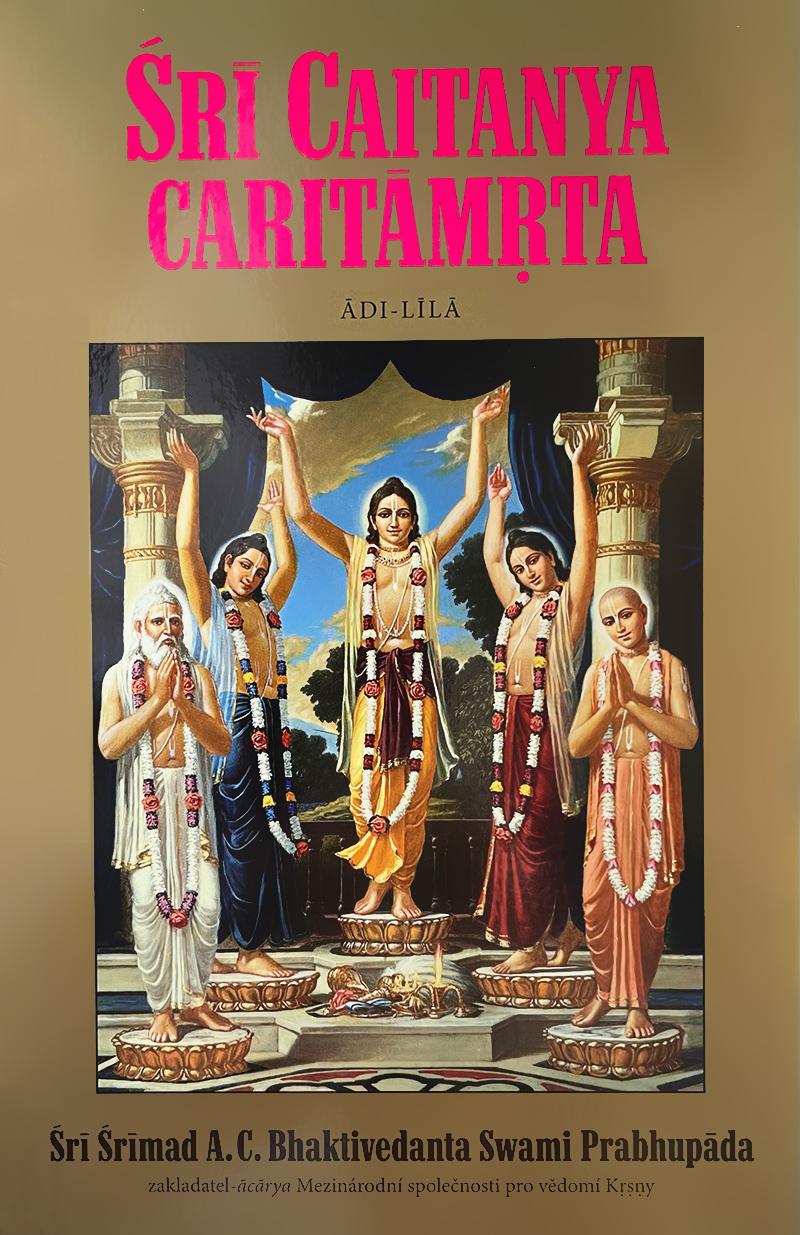
Śrī Caitanya-caritāmṛta - Ādi-līlā - 1. The Spiritual MastersŚrīla Kṛṣṇadāsa Kavirāja Gosvāmī states that the instructing spiritual master is a bona fide representative of Śrī Kṛṣṇa. Śrī Kṛṣṇa Himself teaches us as the instructing spiritual master from within a…
Śrī Caitanya-caritāmṛta - Ādi-līlā - 1. The Spiritual MastersWhen by learning from the self-realized spiritual master one actually engages himself in the service of Lord Viṣṇu, functional devotional service begins. The procedures of this devotional service are …
Śrī Caitanya-caritāmṛta - Ādi-līlā - 1. The Spiritual MastersŚrīla Sanātana Gosvāmī is the ideal spiritual master, for he delivers one the shelter of the lotus feet of Madana-mohana. Even though one may be unable to travel on the field of Vṛndāvana due to forge…
Śrī Caitanya-caritāmṛta - Ādi-līlā - 1. The Spiritual MastersThe English maxim that God helps those who help themselves is also applicable in the transcendental realm. There are many instances in the revealed scriptures of the Personality of Godhead’s acting as…
Śrī Caitanya-caritāmṛta - Ādi-līlā - 1. The Spiritual MastersThe transcendental personal forms of the Lord are a mystery, and the symptoms of these forms, which are absolutely different from anything made of mundane elements, are also mysterious. The innumerabl…
Śrī Caitanya-caritāmṛta - Ādi-līlā - 1. The Spiritual MastersAham means “I”; therefore the speaker who is saying aham, “I,” must have His own personality. The Māyāvādī philosophers interpret this word aham as referring to the impersonal Brahman. The Māyāvādīs a…
Śrī Caitanya-caritāmṛta - Ādi-līlā - 1. The Spiritual MastersBefore the creation and after its dissolution, only the Supreme Personality of Godhead and His associates exist; there is no existence of the material elements. This is confirmed in the Vedic literatu…
Śrī Caitanya-caritāmṛta - Ādi-līlā - 1. The Spiritual MastersThe Lord indicates herein that before the material creation He existed in fullness with all transcendental opulences, including all strength, all wealth, all beauty, all knowledge, all fame and all re…
Śrī Caitanya-caritāmṛta - Ādi-līlā - 1. The Spiritual MastersThe word yat refers to Brahman, the impersonal effulgence of the Lord. In the Brahma-saṁhitā (5.40) it is said, tad brahma niṣkalam anantam aśeṣa-bhūtam: the Brahman effulgence expands unlimitedly. Ju…
Śrī Caitanya-caritāmṛta - Ādi-līlā - 1. The Spiritual MastersSat means “effect,” asat means “cause,” and param refers to the ultimate truth, which is transcendental to cause and effect. The cause of the creation is called the mahat-tattva, or total material ene…